
When Disruption Compounds: Navigating Propylene Oxide Supply Chain Challenges
In today’s global chemical market, disruptions tend to compound. What starts as a single event can quickly trigger a chain reaction, rippling across regions, raw materials, and supply networks.
That’s exactly what we’re seeing now with propylene oxide (PO), a critical building block in polyurethane systems used across industries.
A Key Production Shutdown
In March, a fire at a major chemical complex in Texas forced an unplanned shutdown of propylene oxide production. As one of the largest domestic suppliers, this facility plays a significant role in supporting U.S. demand.
Even under normal circumstances, an event like this would tighten supply. But this disruption unfortunately landed in an already strained global environment.
The Bigger Picture: A Global Supply Chain Under Pressure
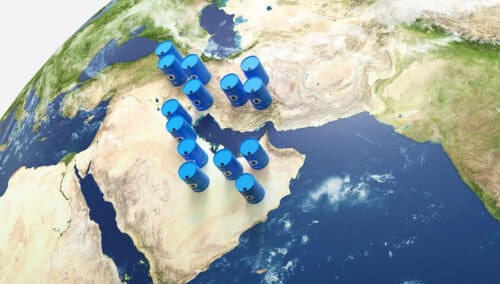
Geopolitical tensions in the Middle East have introduced significant challenges to the movement of raw materials. With disruptions impacting crude oil flow and shipping routes—particularly through the Strait of Hormuz—access to specialty chemicals is becoming harder and slower to transport.
The effects extend beyond raw material availability to include:
- Delayed or stranded shipping containers
- Disrupted or rerouted freight routes
- Increased lead times across the board
- Less predictable global supply chains
For chemical manufacturers, this creates a double constraint: limited supply, both domestically and internationally, with no reliable alternatives.
Why This Matters for Polyurethane and Polyurea Systems
Propylene oxide is a foundational input in many polyurethane and Polyurea chemistries. When supply tightens, the impact cascades, creating a snowball effect.
As PO availability declines:
- Downstream materials become constrained
- Supplier capacity tightens across multiple product categories
- Costs increase due to scarcity and competition
- Procurement strategies shift rapidly
This has led many buyers to move away from international sourcing in favor of domestic suppliers. While that shift is understandable, it places additional pressure on already constrained U.S. production.
A More Complex Reality for Custom Formulators
For companies like ours, the challenge is even more nuanced. Unlike commodity suppliers, Copps Industries specializes in highly engineered, custom epoxy and polyurethane systems. These formulations often rely on a broader and more complex network of specialty raw materials.
That means:
- Supply chains are deeper and more interconnected
- Material substitutions aren’t always straightforward
- Quality and performance standards can’t be compromised
In short, simplifying formulations to work around a disruption isn’t an option. Maintaining performance requires us to navigate—not avoid—complexity.
How Copps Is Staying Ahead of the Disruption
While the current environment is dynamic and uncertain, Copps is actively managing supply chain risks and planning ahead.
Our key actions include:
- Proactive inventory planning. We began building strategic inventory positions early, monitoring both raw materials and finished goods to stay ahead of shifting market conditions.
- Daily supplier engagement. We’re in constant communication with core suppliers, domestically and internationally, to understand availability, anticipate constraints, and identify alternatives, where possible.
- Diversified sourcing strategy. With long-standing relationships across a regionally diverse supplier network, we’re not reliant on a single source. This flexibility is critical in times like these.
- Operational readiness for uncertainty. Rather than assuming a quick resolution, we’re planning for multiple scenarios. We recognize that supply chains operate on multi-month cycles and recovery takes time.
- Transparent customer communication. We’re keeping customers informed as conditions evolve, doing our best to offer updates on availability, lead times, and cost impacts.
It’s important to remember that reaction is often quicker than reality. Even as geopolitical conditions shift, the supply chain can’t recover overnight.
To illustrate, here’s a fun fact: oil tankers are exceptionally large…and exceptionally slow. They travel at a pace of 10-15 knots, which is approximately the speed of a Schwinn bicycle!
That means once things start moving again, materials that were delayed in transit could take 60 days or more to reach ports. Then, production facilities affected by the delays may take months to return to full operation. Pent-up demand creates additional pressure once supply resumes, and market behavior, like accelerated purchasing, is also likely to prolong volatility.
A Steady Partner in an Uncertain Market
No manufacturer is immune to global disruptions, but how they manage those challenges makes all the difference.
Copps brings decades of experience navigating complex material environments, including periods of extreme volatility. That experience, combined with our commitment to quality and strong supplier relationships, allows us to respond with clarity and confidence.
At Copps, our focus is always on delivering reliable, high-performance solutions and helping you navigate whatever comes next.